Category Archives: Author Interviews
Author Interview: Victoria Christopher Murray
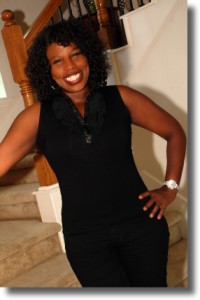
I can’t tell you how excited I am to have interviewed, Victoria Christopher Murray. I discovered her with her first book, Temptation. After I read it, I reached out to her on MySpace. She was so gracious and wrote back. We have been in contact ever since. I finally had the chance meet her this summer at her book signing in New York City of Never Say Never. I have never met such a generous, giving and helpful writer/author in my entire life. I consider her my mentor. I am blessed to know her and read her amazing books.
*******
1. What are some of your favorite books?
My favorite books are the books that have had the greatest impact on me; books that made me really want to pursue my dream as a writer. Native Son, by Richard Wright, I Know Why the Caged Bird Sings, by Maya Angelou, and Manchild in the Promised Land by Claude Brown.
2. Which book was the hardest for you to write?
Every single book that I write is hard. Really. Getting words down on a page for me is like pulling teeth — it’s just so hard to write. And interestingly, the longer I write, the more difficult it gets.
3. Which book was the most fun to write?
Any book I write with ReShonda Tate Billingsley is fun. Because it’s like she’s one-half of my brain. We are so in sync, it’s scary, and we are definitely writing twins. Plus, when I write with ReShonda, I laugh. And don’t let us tour together….
4. What is your writing process or practice in writing novels?
My writing process is quite simple. I write! I write every day and really, just about all day. I write and write and never go back to edit until I have a completed manuscript. Because if I keep stopping to edit, I’ll never finish. I’m on a constant deadline; with at least three books a year, as well as ghostwriting projects. So, I take advantage of every single bit of time that I have. And, I can write anywhere — in cars, on the train, at airports and on airplanes…it doesn’t matter. I write!
5. You have mentioned that aspiring writers have to treat writing as a job. What steps did you take to become the successful and prolific writer/author you are today?
I think the key to treating it like a job is that I show up every day. Like I said before, every day I write. I write when I don’t want to write — that’s what I would do with a job..and writing is my job. So if an aspiring writer aspires to write full time, that writer must start writing every day…NOW!
Pilar, thank you for this wonderful interview.
Thank you, Victoria. It was a pleasure having you.
*******
The production of her novel, The Deal, the Dance and the Devil has finished. The date of release will be announced soon. Also, her novel, The Ex Files has been optioned for a movie.
You can find Victoria Christopher Murray on Facebook, Twitter and on her website.
*******
Victoria Christopher Murray is the author of ten Essence bestselling novels, including Too Little, Too Late and Lady Jasmine. Her most recent novel, Destiny’s Divas, was nominated for an NAACP Image Award for Outstanding Literary Work (Fiction). Winner of the African American Literary Award for Fiction and Author of the Year, she splits her name between Los Angeles and Washington, D.C.
Author Interview: Ed Cyzewski
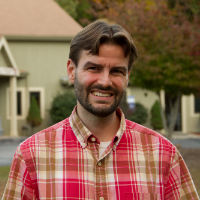
I have the distinct pleasure of introducing you to Ed Cyzewski. I came across his writing browsing on Twitter. I appreciate his honesty in all of his writing. I am glad he agreed to do this, because I enjoyed his interview. I believe you will too.
*******
1) Did you always know you were a writer?
No. I started writing all of the time when I was 12, but my family always emphasized picking a practical career in medicine, law, or business. My high school teachers always praised my writing, but I didn’t take it seriously until graduate school.
2) If not, when did you discover you were meant to be one?
It was a last resort. I attended seminary, got an MDiv, and knew before I finished that I wasn’t cut out to be a pastor. Writing was always in the background, something I expected to do on the side.
3) When and why did you start blogging?
I credit my best friend Josh. When I got out of seminary, I had so much church stuff and theology to process, and he picked out the name “in a mirror dimly” for a blog that we started together. The blog was the continuation of our conversations over breakfast at south Jersey diners. As his family grew, he eventually stopped blogging, but it became a lifeline of sorts for me. While it was a creative outlet, my early years of blogging were mainly devoted to processing my struggles with church.
4) What was it like for you when you wrote your first book?
It’s hard to say. I started it as this side project, but publishing a book was also this kind of flakey dream I had. I wanted it, but I also didn’t fully understand at the time the significance of what I was getting myself into. I just know that the day I signed my first book contract was one of the most emotional days of my life, right up there with my wedding day and the day my son was born. Nothing prepared me for it. It was like I crossed some kind of threshold and was about to do this big, difficult thing I’d always wanted to do but hadn’t quite realized it.
5) Besides the Bible, what is one book that changed your life?
Tough call… I need two. The Cost of Discipleship has been significant in my life as a Christian, but Traveling Mercies was a real eye opener for me. I loved it. It’s a great book. But more than that, I had read books by David Sedaris and thought, “If only I could write funny stuff like this someday about faith!” Lamott showed me that Christians can laugh, be irreverent, and write with an appealing candor about their faith. That book was an important sign post for me.
6) When did you cross over into writing full time?
When my wife got accepted into the English graduate program at UConn, I started looking for work, and I realized I probably had a better chance at finding writing work. In addition, I wanted a portable job that could go with her academic career. The more I invested in writing, the more it has been affirmed as a clear calling for me.
7) Was it a difficult transition and why?
It was a horrible transition. We were broke for two years, living paycheck to paycheck. There are many reasons for that: a cancelled book deal and TWO cancelled magazine columns didn’t help. But I also thought I could find steady work writing magazine articles. A friend looked over my resume and suggested a different strategy for steady income: edit books and write blog posts for companies. We’re not rich, but we’re at least stable for now. Phew!
8) If you had to do it over again, what would you do differently?
Going back to my college days, I would have taken the creative writing program AND the communications program to learn how to do copywriting. Learning to write a good book takes time, so more practice always helps. And copywriting for businesses is where steady freelance income is at. In addition, there are so many places where copywriting comes in really, really handy as a book author and a website owner!
9) What does your average day look like?
I try to write for an hour before taking over with our son for the morning. Then I hang with him and try to do a few things here and there if he’s playing happily. I put him down for a nap around noon these days and start working. My wife comes home during his nap and takes over for either all or part of the afternoon depending on her work schedule. The best time to write is in the morning, but writing in the afternoon is cheaper than paying for childcare!
10) Do you have any mentors or influencers?
I’ve had a lot of great guides along the way. Matthew Paul Turner has been among the most important sources of advice and wisdom. He’s opinionated, speaks his mind, and really, really cares. I’ll take blunt advice from him any day. Also, I look at writers like Rachel Held Evans and Sarah Bessey as models for working hard, building community, and addressing topics that people care about. My former agent David Sanford was a huge help, and I lean heavily on the feedback of my agent Karen Neumair.
11) Who are your favorite authors and why?
I have a hard time picking a favorite author. I’m probably too picky. No one can write a fact-based nonfiction book like Malcolm Gladwell. He is the master of telling stories while conveying a big chunk of information. I think there are a lot of nonfiction authors who have great ideas to share, but they fail to make it compelling and readable. That is the area where I’m spending a lot of time these days. When it comes to fiction, most of the books by Jasper Fforde are brilliant.
12) What are your all time favorite books and why?
I usually end up recommending Jonathan Strange and Mr. Norrell, Cold Comfort Farm, and Jasper Fforde’s Thursday Next and Nursery Crimes series. I also love Girl Meets God. I’m sure I’m forgetting something really obvious too!
13) What things did you do or books do you read to perfect your craft?
I read Writers Digest, blogged a lot, only read books that I liked, read writing advice books that had general craft tips like On Writing, and participated in writing groups. The most important thing for me was to take myself seriously enough to practice but not so seriously that I stopped practicing.
I share a lot of my publishing lessons in this eBook I put together: A Path to Publishing: What I Learned by Publishing a Nonfiction Book.
14) Lastly, what advice would you give a novice writer?
Get a notebook and carry it everywhere. A small moleskine or medium moleskine is perfect. Start rituals. You need habits and rituals to cultivate good writing habits. Before you go to work, spend 30 minutes writing anything, brainstorming, sketching characters, griping, whatever. Just start jotting down ideas. You need raw materials. Don’t expect to use them all. But let them roll around in your head. Create space in your day to just think about your writing ideas. Then, when you sit down at the “blank page,” you’ll have plenty of jumping off points.
Thank you so much, Ed.
*******
Ed Cyzewski (MDiv Biblical Theological Seminary) works as a freelance writer in Columbus, OH. He is the co-author of Unfollowers: Unlikely Lessons on Faith from the Doubters of Jesus and author of Creating Space, Coffeehouse Theology, Divided We Unite, and A Path to Publishing. Ed writes regularly for a number of magazines and web sites. He blogs on theology at www.inamirrordimly.com.
Author Interview: ReShonda Tate Billingsley
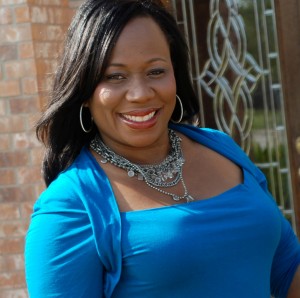
It is an absolute honor and privilege to interview the gifted, prolific, best selling author, ReShonda Tate Billingsley.
I discovered Ms. Billingsley through one of my favorite authors, Victoria Christopher Murray. They have written books together and refer to each other as writing twins.
Ms. Billingsley’s most recent release, A Family Affair is another best seller. All of her books are best sellers.
I’m excited to present to you, Ms. ReShonda Tate Billingsley.
*******
1) Did you always know you were meant to be a writer?
Yes, I always knew it. I was always making up stories. (My mom called it lying).
I remember one day in class we had to write about our summer vacation. So I wrote about how I lived in the projects with my mom and sister and how we didn’t have much and how I had to dodge gangs and drive-bys. The teacher actually told my mom and my mom was livid because we lived in a nice middle class neighborhood. (I’d made the story up because it was so much more interesting than my real life).
Actually, my first paid gig was for True Confessions magazine when I was fifteen. I wrote a story called “I stole my sister’s husband” and they published it. When the check came in the mail, I was too terrified to let my mother know I had written for the magazine, so I never cashed it.
2) Was there a major turning point or epiphany that lead you to become a full time writer?
While I was working as a reporter, I was writing part-time. (I had eleven books at that time).
My literary career was really taking off, but there were so many things I couldn’t do because I only had two weeks of vacation. So, I decided to walk away from my job and write full-time.
I didn’t make that decision out of the blue. I, of course, talked it over with my husband, who has always been my biggest supporter. My faith also helped me make that decision. Not to mention a solid exit plan.
3) You were a journalist, reporter, speaker and more, did you find the crossover into writing fiction difficult?
No, I never found it difficult because as a reporter, I went out and interviewed people for stories. I stuck to the facts.
As a fiction writer, I can let my creativity flow.
4) What have you learned in your writing journey since your debut novel, My Brother’s Keeper?
Oh wow! I’ve learned so much. I’ve grown as a writer because writing is my passion. But I’ve learned to stay true to me.
I don’t write what’s hot; I write what’s in my heart. And I’ve learned that I’m always in need of knowledge.
I strive to make each book better than the last.
5) Would you do anything differently?
I would definitely have a better business plan. I’m a creative person. But being an author these days requires a business mindset.
When I was self-published, I would sell some books, go buy some shoes. I didn’t have the business side together.
Even now, with a mainstream publisher, there are so many things I need to work on the non-creative side.
6) What is your creative process and writing routine?
When I sit down to write a story, I ask myself if ten writers were given this topic, how would they all write it? Then, I work to write it differently. (I used this process when I was a TV reporter as well). There are no new story ideas…the key is in how YOU tell them….I’d love to say I have a specific routine, but as the mother of three, I write when I can, I just make sure that I WRITE!
7) How do you balance your personal and professional life as a successful author?
Not only am I a wife and mother, but I’m also a co-caretaker for my mother. So, I write any free time that I have.
When I’m at a traffic light, I’m actually writing. I dictate into a tape recorder to help me more effectively and efficiently get things done.
I believe every minute you spend talking about what you don’t have time to do could be spent doing it.
8) What specific things could you share that helped shaped you as a writer?
Using every bit of free time I have by writing. Not only do I write, but I read.
Writing workshops and seminars has also helped to shape me into the successful writer that I am today.
9) Do you have a mentor?
I don’t, but I have colleagues that I bounce ideas off of and who help me work through my stories.
10) What inspires you?
I never want to look back on life and say “I wish I had…”
11) What are some of your favorite books and why?
I love reading literary works like Child of God by Lolita Files and Perfect Peace by Daniel Black, and then I love discovering new authors, so I’ll read a self-published book in a minute!
12) What authors affect you and why?
I would have to say my writing twin, Victoria Christopher Murray. Collaborating with Victoria has definitely stepped up my writing on so many levels. She challenges me and I love a challenge.
13) What books have you read that have helped you as a writer?
Any good book motivates me.
14) What advice would you give a novice writer?
Write every day. Even when you don’t feel like writing, write. You’ll never finish that book if you don’t write.
Set realistic, attainable goals.
For me, I started with three pages a day, five days a week no matter what. Well, before I knew it, those three pages turned to thirty.
*******
Biography
ReShonda Tate Billingsley always did have an active imagination. From making up stories to crafting award-winning poems, the national bestselling author has always maintained a love for telling stories. After numerous rejections from publishers, ReShonda stepped out on faith, established her own publishing company, and released her debut novel, My Brother’s Keeper.
It’s a move that paid off as megahouse publisher, Simon & Schuster/Pocket Books picked the book, and to date, has published all of ReShonda’s books.
A former television and radio news reporter, ReShonda is an editor for the Houston Defender Newspaper, as well as a professional editor, ghost writer and literary consultant. She has worked as a reporter for The National Enquirer and as an anchor and reporter for NBC, ABC and FOX television stations in Beaumont, TX, Oklahoma City, OK and Houston, TX. She left her job at FOX 26 News in Houston in 2007 to write full-time.
And write she does…
ReShonda is the national bestselling author of 28 books. Her sophomore novel, Let the Church Say Amen, has been made into a movie, directed by actress Regina King and produced by Queen Latifah’s Flava Unit Productions. The movie is slated to be released in Spring 2014. (ReShonda, who served as a consultant, makes a cameo in the movie). Her entire Amen series, as well as the novel I Know I’ve Been Changed has been optioned by BET. ReShonda also makes her on-screen acting debut in the movie, which will air in 2013 as part of BET’s new original programming lineup. Several of her faith-based books have become a sought-after property in Hollywood.
A much sought-after public speaker, ReShonda recently won the NAACP Image Award for Outstanding Literature for her book Say Amen, Again and was nominated again in 2013 for her book The Secret She Kept. She has won numerous awards for her journalism, fiction and poetry writing skills. She is a five-time winner of the National Association of Black Journalists Spirit in the Words competition. Considered one of the top Inspirational Fiction authors in the country, her books remain a staple on the Bestseller’s list and have been featured in USA Today and Ebony Magazine as Summer Sizzlers. She was recently inducted into the Arkansas Black Hall of Fame.
A member of Alpha Kappa Alpha Sorority, Inc. and the Missouri City/Sugar Land Chapter of Jack & Jill of America, ReShonda is a former professor of Broadcast Journalism at Langston University. She currently lives in Houston with her husband, Dr. Miron Billingsley, a Vice-president at Prairie View A&M University, and their three children, ages 13, 11 and 6.
Author Interview: Rhonda McKnight
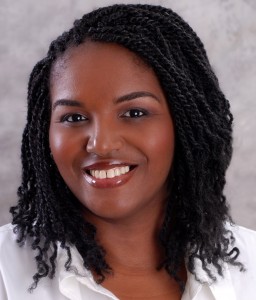
Today I have the great pleasure of introducing, author Rhonda McKnight.
My connection to this superb writer is through our mutual friend, mentor and amazing author, Victoria Christopher Murray.
I really enjoyed her interview, and I hope you will too.
********
1) Tell me about your current project?
Breaking All The Rules is my first romance and my second indie project.
All of my novels were with traditionally published with Kensington and my first indie project was only indie for a short time. I sold it to my publisher for re-release.
Breaking is the story of a Deniece Malcolm, a wedding planner, whose pregnant baby sister is marrying her ex-fiancé. I think it’s a no, no for most people, but dating an friend or relative’s EX is a major taboo in the African-American community.
To make matters worse, Deniece’s sister has the nerve to ask her to help with the wedding.
Our hero is the groom’s rich, sexy, younger cousin, Ethan Wright. Ethan’s interested in Deniece, but she has a rule about dating younger men.
Despite her resistance, things heat up between them and Deniece begins to wonder if it’s time to break a few rules of her own.
2) How has Breaking All The Rules been received?
Readers love it. They love it more than I ever thought they would. It’s my first romance and I was a little nervous about introducing something that wasn’t the women’s fiction I normally write, but they can’t get enough of my hero.
The reviews have poured in and the sales have been better than I ever thought they would be. I also received my first review in USA Today and it was glowing. I was quite proud of that.
3) How long did it take you to write your first novel?
Too long. About 32 years. (That was a joke.)
I became serious about publication in 2003 and started Secrets and Lies in May of 2004.
I work full-time, so any writing I do is in the evenings and on weekends.
I finished the book in early 2007, but along the way I completed graduate school, had a baby, and in general was not working on the manuscript. Time in front of the computer was probably a total of seven months.
I wrote my second novel, An Inconvenient Friend in six weeks.
4) What was the most difficult thing about writing a novel?
The stress of draft writing and the discipline of pushing to the end without hating it too much along the way.
5) Who are your mentors or influences?
Victoria Christopher Murray is my mentor and she’s taught me more in a phone conversation than I could learn in ten years in this business.
6) Who are your favorite authors and why?
Victoria Christopher Murray, Pamela Samuels-Young and the late BeBe Moore Campbell. Victoria and the late Ms Campbell are master story tellers.
Ms. Moore in particular weaved multiple complex plots and a large cast of characters seamlessly. I miss her voice. I love a good mystery.
Pamela is the next John Grisham. Her legal thrillers are not to be missed.
7) What are your favorite books and why?
My favorite books are Too Little, Too Late by Victoria Christopher Murray, My Soul Cries Out by Sherri Lewis, A Heart of Devotion by Tia McCollors and Passing By Samaria by Sharon Ewell Foster.
In addition to being well written, I learned something from each story that has helped me in my Christian walk. That’s important to me and puts them at the top of my list.
Another favorite is Gather Together In My Name by Tracy Price-Thompson. I read it in one sitting and I’ve read it twice. I never read a book in one sitting and I never read a book more than once, so there was something special about it. I’ve not quite sure I’ve figured it out yet. I think it was just a fantastic story.
8) What books have helped you as a writer?
Books about novel writing. I own nearly 40 craft books and have probably borrowed at least 20 more from the public library.
9) What are you currently working on?
A Christmas novella that won’t end. LOL. Give A Little Love. It’s due for release in early December. I hope!
10) What do you want a reader to get from your novels?
I want readers to be entertained by my stories, because I’m an entertainer first. I’d love for them to also walk away with a message about hope, faith and forgiveness, because those are the themes that resonate from my work.
11) What is your writing and creative process?
I’m a bit of a planner. My stories or characters come to me and I write the first one or two chapters, but then I never write more until I know exactly who the people are and what’s going to happen.
I typically write the last chapter after I write the first and I force myself to outline and determine the goals, motivation and conflict before I get to Chapter 3. I write much faster and cleaner that way.
I draft write without re-writing and then re-write, re-write and re-write until I’ve reached my deadline.
My books are never finished. I just have to stop.
12) How does your faith play into your writing?
Heavily, I write who I am and I am a person who loves the Lord, so it shows in my stories. I’m also a divorced woman who still loves men, so the men in books are flawed, but they smell and look good.
13) How does a Christian writer write about romance and sex without feeling like they are sinning?
Let me say this so it’s clear up front, I write a pretty sweet romance. I’ve never written anything but chaste stories. I’m not sure how it works for other people, but I don’t think there’s anything un-Christian about romance and sex, and I consider myself to be a conservative Christian.
However, I also know the word “Christian” means different things to different people. Being Christian is my faith, but it’s also a lifestyle. While I recognize that we’re in our flesh (the human state) until we die, there are things that we can do through faith; remain celibate is one of them.
My stories are sexy, but I don’t write sex scenes. My characters are strongly attracted to people, but “though shalt not fornicate” in a Rhonda McKnight story. I balance what is realistic with what the Holy Spirit says is okay. When I rewrite it’s very easy to find content that needs to be deleted.
14) What do you think is the number one thing that hinders writers?
That’s an interesting question. Are writers really hindered? I don’t believe we are.
Writing is solitary act that can be as private or public as the writer decides.
Authors are hindered or can be by lots of things: contracts, deadlines, genre, reader expectations, the demands of marketing, etc, etc, etc.
I could go on and on, but I’ll sound ungrateful. LOL. I am glad to have a book contract.
15) Lastly, what advice would you give a novice writer?
Attend writer’s conferences (American Christian Fiction Writers is a very good one, as is Black Writers Reunion Conference) and build a network of other writers.
You’ll learn a great deal at a conference and your network will encourage you to stay the course. I know mine did.
The writers I connected with ten years ago are the same people I email and text good news and “grumble, moan and whine to” today. They’re also the people who help me promote my work and I help them. Those relationships are very important.
Pick a project and make yourself finish it. Get to “The End”. The End feels so good.
Lastly, believe in yourself.
Everyone won’t support your writing. Most people won’t, so be okay with ‘you’ being the only person who does.
Thank you so much for this wonderful interview, Rhonda McKnight.
********
Rhonda McKnight is the author of the Black Expressions Top 20 bestseller, A Woman’s Revenge (Mar 2013), What Kind of Fool (Feb 2012), An Inconvenient Friend (Aug 2010), Secrets and Lies (Dec 2009) and Breaking All the Rules (Oct 2013).
She was a 2010 nominee for the African-American Literary Award in the categories of Best Christian Fiction Novel and Best Anthology. She was the winner of the 2010 Emma Award for Favorite Debut Author and the 2009 Shades of Romance Award for Best Christian Fiction Novel.
Originally from a small, coastal town in New Jersey, she’s called Atlanta, Georgia home for fifteen years.
Visit her at www.rhondamcknight.net and www.facebook.com/booksbyrhonda and follow her on Twitter @rhondamcknight.
Author Interview: Shawn Smucker
I came across Shawn Smucker and his beautiful writing through a mutual friend and gifted author, Andi Cumbo-Floyd.
I was fortunate enough to be able to review How to Use a Runaway Truck Ramp written by him and his wife, Maile. I loved reading about their cross-country adventure.
So, it is with great honor and pleasure that I present to you today, author Shawn Smucker.
********
1) What was it like for you as a child?
I had an idyllic childhood. I lived on a farm from the age of 5 until I was around 10, which means I grew up wandering through vast fields, splashing in the nearby creek, creeping through dusty barns, and playing in the cemetery across the street. I have kind parents and three incredible sisters. Some of my favorite memories from that farmhouse involve sitting on the massive porch in the heat of the summer, reading the Hardy Boys or any other book I could get my hands on.
I also had a powerful sense of belonging, I think because my family had such deep roots in the place where I grew up. I had over 20 cousins that lived relatively close, and five or six older cousins at my school, so I always felt very protected and looked after.
2) When did you know you were meant to be a writer?
Not for many years. I always loved stories, but it wasn’t until I went off to college that I became drawn to writing. Then I got pulled into the life everyone expected me to live for about ten years, running businesses and chasing financial success, but eventually I came back around to my love of stories.
3) I read you started reading early on, what is one book that stood out for you the most?
The first books I read that had a tremendous impact on me were the Narnia Chronicles. My parents bought me the boxed set at our church bookstore for $14.97. I still have that set. From that point on, stories became my life.
4) What inspires you?
My children inspire me. My wife inspires me. Just being in the same house with them and living life is adventurous and new every day. When you are in close proximity to other people, you are kind of forced to pay attention, and I think this has been very good for my writing.
5) Who are/were your greatest influences?
John Steinbeck, Anne Lamott, and Madeleine L’Engle, just to name a few. But above all of them I would have to say that Henri Nouwen inspires my spirit as well as my writing.
6) Who are your favorite authors, books and why?
All the folks I listed in the last question, plus many others. The novels that I have loved tend to involve themes of faith and doubt because those things are so central to my own existence. The nonfiction I like tends to explore the contemplative life – things like meditation and silence.
7) What is your writing and creative process?
I’m kind of a fidgeter. It’s something I’m trying to be better about, but right now creativity to me looks like writing for an hour while listening to music and then surfing the web, writing again then getting something to eat. I’m kind of a restless creative, but I’m trying to be more grounded, more focused, just to see if I get better results that way.
8) What does your typical day look like?
I’m not an early-morning kind of guy. I wake up around 7:30, get breakfast for our four kids, then go sit in my office until noon or so. If the weather is nice I’ll write outside. Usually my brain is fried by 3, so I’ll go out, split some wood or take a walk. I try to give my family the hours from 4 until whenever. I try to write for a few hours in the evening after the kids are asleep, but that only happens maybe three times a week.
9) What are you reading now?
Right now I’m reading Aimless Love by Billy Collins. Thanks to my friend Stacy Barton, I had a chance to hang out with Billy while Maile and I were on our cross-country trip, and he was such a kind, encouraging man. His poetry is wonderful because the images are fresh and sharp and there’s a storytelling aspect to the way he writes that is appealing to me.
10) What are your thoughts on faith and art?
Far too many to share in this format! I’ll just say that most Christians try to categorize things too much – is that movie Christian? Is that book a Christian book? Using the word “Christian” to describe an inanimate object makes absolutely no sense to me, except as a marketing term.
I agree with Madeleine L’Engle in that “to look at a work of art and then to make a judgment on whether or not it is art, and whether or not it is Christian, is presumptuous.”
11) What role does faith play out in your writing?
On one hand I would say that it doesn’t play any role in my writing, at least not in any deliberate way on my part. I have no desire to use writing as an evangelical tool. On the other hand, my faith is inextricable from my writing. It’s embedded so tightly into the fabric of me that I’m sure it comes through in most of what I write.
12) How did Building a Life Out of Words come about?
After my wife and I managed to escape from the life our culture tries to impose on everyone, I felt such a strong desire to tell people our story, to help others break free. I probably came across a little dogmatic, but I was still so close to our own experience that it was difficult to bring any objectivity to the book.
13) What are you currently working on?
I’m currently wrapping up a novel I wrote for my children as well as a few biographies (that’s where I make my living, in ghost-writing and co-writing). I’m also in the middle of a book on silence, but I have a feeling that one is curing slowly, one that will take a lot more time for me to think through and get out on paper.
14) When did you start to blog and why?
That’s funny. I kind of forgot about this, but I started blogging because my wife and I decided to go a year without watching television, back in 2010. I blogged all of 2010, 2011 and 2012, and then decided to take a break for 2013. I recently started again after having been away from blogging for about a year.
15) What are your goals and aspirations as a writer and author?
I try not to think too much about big, broad goals. Mostly my goals involve writing everyday and not getting too caught up in building a platform.
16) What would you like your readers to get from your writing?
I think a lot of people have lost hope in life, for all kinds of different reasons, so I’d like to give people hope. I’d also like to remind people that there is a true life waiting for them if they can shed the pressure to conform that this culture puts on all of us.
17) Do you think writers need to get a Master’s degree in Creative Writing to succeed as a writer?
I don’t have a Master’s, so I hope not! But I think it’s important for all writers to think about why Master’s programs are important and helpful – consistency, productivity, and honest feedback, just to name a few things. I think that last one is especially important. Most writers, because of our personalities, tend to surround themselves with a cushion of people who think their writing is unbelievable – you know, mothers, cousins, college roommates. I see this in a lot of writers’ groups, where you have a group of people who are endlessly encouraging but never offer any critical feedback.
We all need support, but we also need honesty from those who read what we’ve written or we’ll never improve, never evolve. I think this gets back to why degree programs can be so important. If you don’t have a degree in writing and don’t plan on getting one, I think it’s important to somehow foster this kind of loving, critical environment.
18) In your expertise, what do you think it takes to become a great writer?
One word: dedication. To writing, but also to reading and to paying attention.
19) Lastly, what advice would you give a novice writer?
Write 1000 words every day without editing. Just write and keep writing.
Thank you for your thoughtful and generous interview, Shawn Smucker.
********
Shawn Smucker is the author of Building a Life Out of Words, the story of how he lost his business, his house and his community, then found happiness making a living as a writer.
He lives deep in the woods of southern Lancaster County, PA, with his wife and four children.
Playwright Interview: Arthur French III
I have the honor of introducing you to a dear friend and playwright, Arthur W. French III. I’ve had the pleasure of knowing him since high school. I had the opportunity of working on one of his short film projects which was a lot of fun. This was back when I was pursuing acting as a career. It’s wonderful that we maintained our friendship since then as we both share much in common.
Without further ado, Arthur W. French III.
********
1) When was the first time you wanted to write?
Probably as a kid, I used to make up stories when I read nursery rhymes.
The first time I really wanted to write, was when I was in high school, and a lot of the usual High School drama was going on at the time, that I didn’t have an outlet to channel it to.
Writing became an outlet for me. I picked up a pen and paper, and started writing how I felt about things.
Within a year, I had written “Teens Today” at sixteen years old, and that was the beginning of my writing career.
2) Who are you influences?
I have quite a few. Woody Allen. I love his early slapstick movies, and he writes about human behavior.
Richard Pryor, because he was an amazing storyteller.
Director Stanley Kubrick, who always directed fascinating works about humanity (Paths of Glory), and then could direct biting satire (Dr. Strangelove). He ran the gamut, that you couldn’t put him in a box.
3) Who are your favorite authors, playwrights and why?
David Mamet playwright is one. Mamet has a way with dialogue that is so real, that you feel you are intruding on a conversation that’s going on, and the fact that he reels you in with his characters.
August Wilson, Playwright. For me, August Wilson is a great storyteller who weaves spirituality and poetry, and it works.
Neil Labute because he shows characters that are messy and unapologetic, and flawed. He shows people at their worst which isn’t bad, but the fact that they make you so uncomfortable is great.
Charles Bukowski is my favorite fiction writer. His book Hollywood was about his experiences when the film studios made his film “Barfly”, and his insider’s look at how the film got made, and the politics, is hysterical. He wrote about Los Angeles in all it’s gritty reality. He’s my favorite fiction writer. he’s also a great poet, and prose writer.
William Shakesphere, because all of his plays are timeless.
4) What inspires you?
I’d say first and foremost it’s anger. If something really bothers me, I’ll jot it down, look at it, and then work on the play.
Nowadays, it’s really anything. If it’s something that’s affected me personally good or bad, or something I’ll see on the street, or on the subway, or if I’m on vacation, I will say to myself. “Hey, I gotta get home and write this down.”.
There is no such thing as a bad idea.
5) What is your writing process?
What I’ll do, I’ll get an idea, jot it down in my writing journal. Once I get home, write out the characters, and then type them out, look at it, and if the idea still flows, I’ll continue with it until the play is finished.
6) When did you know you wanted to be a playwright?
It was Fall 2001. The story on how that happened was for years my father and friends had told me I needed to take a writing class (which I never did.)
Finally, one day I decided I was going to take a writing class.
Then 9/11 happened, and I was shaken. I didn’t know if I wanted to write. I thought about going in another direction. My father told me “look, just go to the orientation. If you still don’t want to writer, okay.”
So, I went up to Frederick Douglass Creative Arts Center, and heard my future teacher, Leslie Lee say “Don’t let 9/11 stop you from finding your voice. Now is the time to write.” After he said that, I pulled out my checkbook, paid for the eight weeks, I haven’t looked back since.
7) Can you explain the differences between a playwright and a screenwriter?
For screenwriting, you have to add the interior and exteriors of the scene, and then have a shot sheet. It’s more technical stuff you have to put in.
Where with a play, it’s basically the words, dialogue, and action.
Screenwriting, is adding more technical things to the script that needs to be done.
8) If you were to name one play you love, which one would it be?
It would be “Blues For Mister Charlie” by James Baldwin.
It was the first play I studied when I started taking play writing seriously.
I loved how the play deals with racism, and how those themes still resonate in our society today.
9) What has shaped you to be the successful and prolific playwright that you are today?
For me, success is doing what I love which is writing plays, and when you love something, it’s all great.
What I wanted to do, even when I was a teenager, was to create great work for African American Actors, and tell universal stories, and I am definitely achieving that.
10) Last, but not least, what advice would you give to aspiring writers and playwrights?
If you come up with any idea, write it down quick!
I would say if you really want to be a playwright/writer is to definitely take a playwriting class, so you know the basics of character, plot, story.
To see a lot of plays, and get a sense of them, and see why they are good, or bad.
Love what you do, and enjoy what you do.
********
Thank you so much, Mr. French.
Biography
Arthur W. French III has been writing plays since he was a teenager. His first play “Teens Today” was produced at Maxwell Glanville’s American Community Theater in Harlem at age 16.
The play then was a winner at the New York Annual Young Playwrights Festival at Circle Repertory Company.
Mr. French’s play “Circuit Breakers” produced by RCL Writer’s Workshop was a winner in the Annual Samuel French One-Act play competition, and was published.
Mr. French’s other play “Bitter Apples” was a winner in the Annual Strawberry one act festival in New York City, and also was published.
His short one act play “He Gives Good Fonts” was a winner at John Chatterton’s short play lab.
Mr. French’s other plays this year have been part of in the Los Angeles NAACP Theater Festival, The Hollywood Fringe Festival, Legros Cultural Arts Festival, and Love Creek Productions.
Mr. French recently competed in this years 31 plays in 31 days series.
He has a new play “I Read Your Facebook Post” coming up at the short play lab in New York City.
Mr. French has studied with Leslie Lee, Steve Carter, and Henry Miller, and is a founding member of the Fusion Gumbo Writers Workshop (which has been held in NY and LA).
Author Interview: Andi Cumbo-Floyd
I first met Andi Cumbo-Floyd on line almost two years ago. I believe it might have been on Twitter. I started following her blog and eventually took her essay class, which is fantastic.
Andi is a dear, kind, generous, gifted writer and teacher. I have learned so much from her over the past couple of years.
She demonstrates incredible patience when I come at her with a million questions. She handles everything with grace and professionalism.
I am happy she agreed to do this interview with me. I hope you enjoy it.
*******
1) When did you know you wanted to be a writer?
You know, it wasn’t until graduate school that I really wanted to be “a writer” per se. Ted Gup, one of my professors, told me that I might want to think about getting an MFA instead of the PhD in literature that I was planning on. That was the first moment that I thought about how much I liked to write. I had always wanted to be a reader – you know, someone people would pay to read books – but a writer – someone who produced those books – that was a new idea to me.
2) Who have been your influences?
What a good question – so first, my parents. They were profoundly generous people, and they taught me always to be kind, even when people weren’t kind to me. They were also big readers, so I got that true from them. My mom could read three or four books in a week, and my dad probably averages about 2 himself.
In terms of writing, I would say Madeleine L’Engle and C.S. Lewis were the first writers who pulled me into new worlds. I still love them.
Also, Tracy Kidder, Toni Morrison, Sherman Alexie, Chaim Potok, Lia Purpura . . . I could go on forever.
3) What books help shape you as a writer?
Well, A Wrinkle in Time by L’Engle and The Chronicles of Narnia by C.S. Lewis taught me that words have real power – the power to heal and comfort and shelter. I learned a lot about incorporating research in writing by reading House by Tracy Kidder. Brenda Miller’s Season of the Body helped me understand structure and the way point of view can alter the entire power and feel of a piece. Rebecca Skloot’s The Immortal Life of Henrietta Lacks showed me a braided structure that is both about the subject and the writer herself. One Hundred Years of Solitude by Gabriel Garcia Marquez gave me permission to use the fantastical – the huge imaginary – in my work. And so many more.
4) What is your favorite genre to read or write? What inspires you?
I absolutely adore the essay – the personal essay, the memoir essay, the meandering essay, the avant garde essay – any essay, even academic ones sometimes. I love to read them and write them. They just remind me how versatile both language and the human experience are. LOVE!
When I’m just zoning out though, I usually choose young adult novels with some sort of supernatural bent. Magic always makes a day better.
5) In your book, God’s Whisper Manifesto you write about your dream about owning a farm, when did you initially get the vision?
About ten years ago, I started hearing a lot of my friends – many of whom were doing work with disadvantaged populations or in developing countries – telling me how tired they were, how much they just needed a break, and I got this idea to have my home be a place where people could come and find respite.
As I thought about that dream, I began to read a lot about local foods and sustainability – people like Barbara Kingsolver and Jenna Woginrich. And as I thought about these things, I began to develop a dream for a farm, where we grew our own food, supported local farmers, and also provided people – artists in particular – a place to come and rest. Hence, the dream – and now the reality – of God’s Whisper Farm.
6) Besides owning a beautiful farm, writing on your blog, you also have another book coming out, You Will Not Be Forgotten. How did the idea for writing this book come about?
I grew up on what used to be a slave plantation here in Virginia – my dad was the manager there. All the time I lived there in high school, I never really thought about the people who built that place, the slaves. Sometime in college, I realized that some of the people I had gone to high school with were probably descended from those enslaved people, and I began thinking, wanting to know more about the individuals who had lived there and built the massive plantation houses on the property. So, that’s where the book began.
7) You also teach online classes, coach and edit manuscripts, besides crocheting the most adorable things. Could you tell me a little bit more about this?
Well, I was a college professor for over ten years. I taught creative writing and composition and literature. But I decided to step out of that to focus more on my writing, but I still love to teach, and I love to work with writers of any experience level. So I started Andilit – my business of online classes and manuscript editing. I’ve been making living for over a year now just doing that, and it’s wonderful.
8) I read you have earned a Bachelor’s Degree and two Master’s degree. You were also a professor in many universities across the United States. Did you always want to be a professor? What was the pivotal moment you decided you wanted to be a writer full time?
Yep, I’d always wanted to teach literature . . . right up until that day when Ted Gup suggested an alternative. Then, I refocused and moved toward wanting to teach writing, which is what I focused on for part of my MFA. But then, my mom got sick and died from cancer, and that put a lot of things in perspective for me. I didn’t want to spend my time in meetings or doing administrative tasks for colleges who did not appreciate my teaching or writing in any serious way. I wanted to write and work with other writers. Hence, my own business.
9) What does your average day look like and what is your writing process and routine?
My day begins when my husband’s alarm clock goes off. He rolls over and snoozes; I get up and get the coffee on. I do some morning chores and have breakfast with him, and then I hit the computer.
I try to blog early in the day and then spend some time connecting with folks on Facebook or Twitter or via email.
Lately, I’ve been moving from that into my client’s work – editing manuscript, working with students, etc.
Usually, I take some time in the mid-day to read a bit, and then I’m back editing or reading student work.
Toward the end of the day, I turn to my own work and do my very best to get 1,000 words a day in every day.It used to be that I always wanted to get my own work in first, and there is something to be said for being free of other voices when you go to the page. But lately, I’ve found it very wonderful to look forward to my work-in-progress all day.
Plus, I like to close my day with creativity. It’s a wonderful way to be tired.
10) Lastly, what advice would you give to an aspiring writer?
Write. That’s it. Write and read. Don’t worry about figuring out your niche or building a platform. If you want to write – if you want to write for the art itself, I should say – then just write.
Practice, practice, practice. There’s so much to life as an artist that can’t be measured with money or rankings. Focus on the art, and you will never be disappointed.
Thank you, Andi.
*******
Andi Cumbo-Floyd is a writer, editor, and writing teacher who lives and works from her own little 10 acres in the mountains of Virginia – God’s Whisper Farm. She is happily married with a hound dog named Meander and three cats – Oscar, Emily, and Charlotte. With the help of her husband and dad, they are building a little place there for writers and artists to come and respite and sanctuary.
She is a creative nonfiction writer who is in the stages if self-publishing her book entitled You Will Not Be Forgotten, which tells the story of the people who were enslaved on the plantation where I was raised and of my process of getting to know them.
You can visit her blog at www.andilit.com.
Author Interview: Eric Jerome Dickey
I am uber excited to present author Eric Jerome Dickey. His new book, Decadence, released in April and is getting excellent reviews.
I am grateful to have had the opportunity to interview this gifted, prolific and successful novelist.
Eric Jerome Dickey is kind, generous, interesting, intelligent and funny. It was a privilege getting to know him more in this interview. I can’t tell you how much I enjoyed it and I hope you will too.
*******
1) Have you always known you wanted to be a writer? If not, when did you discover you were meant to be one?
I guess you could call me an accidental writer. I had thought I’d be an engineer until I retired or became a victim of the Peter Principle, or a karate guy, maybe eventually write or perform comedy full-time, maybe become a character actor… the list was long, but being a writer wasn’t included.
I would never say that I was meant to be one. I am enjoying it while I am here. Until I move on… I give it my best.
2) Initially, you were a software developer in the aerospace industry. You also pursued acting, stand-up comedy and screen writing for movies. Was there a pivotal moment that changed the course of your life?
I dropped out of grad school at CSUF after the first exam, followed my heart, what I needed at that moment, and decided to take a chance, had nothing written, no real plan, ran on desire, and thanks to a partial SEED scholarship from International Black Writers Los Angeles, I was able to attend UCLA and become part of the creative writing program through the extension section of the university.
Go Bruins! Yeah, a University of Memphis Tiger said Go Bruins! LOL.
From day one, once inside of those classes, I felt like I was at home. I walked away from the undergraduate degree in Computer Systems Tech, but I carried the knowledge with me. Every class I had taken at the University of Memphis to complete those requirements, from English, to Physics, to Sociology, to Latin, to Electronics, to kicking it in a karate classes with Bill Wallace, it all went with me.
From cradle to the grave, we are all of our ages, and we never leave neither experiences nor knowledge behind. A lot that I learned on the technical side is employed in what I do now. A lot of South Memphis. A lot of the culture of L.A. Antigua. Barbados. Argentina. London. Places I’ve lived for at least a season.
Stories have to be logical, have to have a logical progression. Writing is about communication, and clarity. So all of those wonderful classes came in handy. Left brain meets right brain all day long and they dance in the land of creativity.
The acting classes taught me about character creation, motivation, movement, story, many things. Being in theater helped me see many things. Being in an Improv group did a lot for me as well. Don’t get me started on reading and writing comics. It’s all storytelling.
3) What shaped you as a writer?
I think I answered that during my ramble above. LOL.
Many hours of studying, reading, writing, trying, failing, falling, and getting back up. Every writer’s objective should be to find their own voice, not to emulate or duplicate the works of others. Admire, learn, then do your own thing. Find what works for you.
4) What is your creative process? Where do your ideas and inspiration come from? What is your writing routine?
I have no routine. I just work. From Monday to Monday, bank holidays and birthdays. I get up and work. Morning. Noon. Night. Each day is different, and that lack of redundancy keeps it exciting.
What I do is better described as being a creative engineer. Write. Flowchart. Think. Rethink. Restructure. Rewrite. Search for better verbs. Find another word for thesaurus and something that rhymes with orange. Look for better nouns. Close out book and move on to the next project the next day.
The word or term writer is too generic for my liking. Write checks. Write term paper. It’s not specific. I prefer imagination engineer. But, I will call it writing. Keeps me from confusing the IRS.
Being a writer is operating a small, medium, or large business. You are the CEO, the laborer, and everyone in between. You do it because there is a creative fire inside of you. What you have, it can’t be taught, can’t be bought at the crossroads.
You can learn the rules, can teach the rules, spit theory, but no one can teach you creativity. I love the challenge. The personal challenge.
It’s not about fame, or glory, or what the other guy or gal is doing, or (if you of that type) feeding the narcissism that runs through your veins.
Maybe more than a few might want to do a book so they can have an event and they can be the center of attention, the bride or groom of literature, and hoped to be liked by all in the kingdom.
I’ve seen them, have seen many come and go since back in ’96, sitting at a table, screaming this really happened to me, book poorly written, no one caring, skipping that table to get to the flavor of the month, maybe flavor of the year.
Maybe some writers skipped the part about treating the occupation as a craft, and not as a vehicle for their vanity, not as a tool of revenge, and their efforts died on the vine.
Sitting in a class, getting peer review, attending seminars, sharing work to get critiqued, that was too much work for them.
Better to get feedback on the front end than rejected on the back end. The rejection on the back end is very harsh.
Many kill their own brand out the box.
It’s all about putting your butt in the chair and attacking the project.
I have no idea what inspiration means, honestly. It’s a very reactive word, to me. For me work is proactive.
5) What are some of your favorite books, authors and why?
The Cay. Lord of the Flies. Devil in a Blue Dress. The American. Girl with a Dragon Tattoo.
Why? The writing. The creativity. The writing. The writing. The writing.
6) What are you currently reading?
Just finished reading Grave Descend. Cool noir. Today, was reading Hypothermia by Arnaldur Indridason (Icelandic), then Three Seconds by Roslund & Hellstrom (Swedish).
7) Did you ever imagine you would become as successful as you are? How does it feel?
It feels regular, actually. I’m an introvert. Well, I’ve become one. Used to be a time when I had to keep moving like a shark.
When I think of the truly successful writers I think of those who have been accepted beyond the walls of the USA and have been translated into more languages than people know exist. They can write five books and be ghost, set for life. That is an uber financial success, which is needed to survive in a country where nothing is free.
I love what I have done. Hope it stands the test of time.
But completing a novel, that’s success, even if you never sell one. The first time I held a copy of Sister, Sister in my hand was a WOW moment. From my cheap word processor to the bookstore… Wow.
8) You have a keen awareness of a woman’s psyche and emotional make-up. Were you born with this gift? Or was it learned and developed over time?
It’s writing and studying and being observant. Comics have the same skill. Used to be one. No special powers. Everything is right there in the open, if not, then it has been revealed on damn near every talk show every aired. Much about women is put in those little things called books as well.
There are no secrets, only what people chose to ignore. The big thing for me at one point was studying psychology, trying to understand the way we are seemingly wired, figuring out the way people act the way they do, and what role culture plays. (Every culture has the same interpersonal issues, IMHO, and the same desires run though all men and women around the world. We are human first.)
I have to understand the men that I create, many types of men as well. I have to study other cultures to create some of the diverse characters. The characters, be it noir, a thriller, or erotica, or something close to being literary, or an amalgamation of genres, I try not to do stock characters.
The characters that I have chosen to employ or design range from religious, to agnostic, to atheist. Not all have the same value system. From young to old, from French to Southern Black to Southern White to Russian to Spanish to Mexican to Trinidadian to East Indian to Bajan to being a native of Los Angeles, don’t ignore the male characters.
Men have emotions too. Men are complicated. Men are human. Men have pressures placed on them by culture and society as well, not all to their liking. I think the male characters are overlooked, and at times (overly) romanticized. (Hollywood and movies and their style of storytelling has impacted the way people read novels, sadly.)
I have to create a character and see that character from many levels, from many angles, and understand his or her motivation(s).
I am the designer of the matrix. LOL. Red pill, or blue pill? Pick one.
9) Out of all the books you have written, which story was the hardest for you to write and why? And which one was the most fun to write?
ROFL. None have been fun. Each project takes many months. You work until you are burned out. Then you work until it is done.
Writing has never been a barrel of monkeys. It’s work.
Thieves’ Paradise was the hardest way back when, hard characters, the noir plot, the decision to erase a character I had put much energy into creating.
The cons. It’s never the book that’s the hard thing. I had done about 6 books in a row, had toured all over the world, and I was tired. No rest for the weary, nor for those who are on the road to some level of success.
We all have difficult seasons. Your mind isn’t as well oiled, or things in your real life create a distraction or give you a challenge.
You move, change houses. You change jobs. You get sick. Winter comes and the lack of sun slows your productivity. Your mother moves in and brings two dogs, a cat, and sings like a donkey day and night. You have relationships, good and bad, both distracting and at times irritating in their own way.
We’re still (temperamental) people who have to get up and cook and do laundry and run errands and pay speeding tickets and water the lawn as read James Patterson books and wonder how he produces 15 books a year. Flashbacks.
Cheaters was a challenge due to the novel having three voices and at least twenty supporting characters.
Between Lovers was hard because I only used on POV.
Each novel is like a child and each child has his or her own personality.
10) What is the single thing you want your readers to take away from your books?
Overall, I want the story to make sense, just want the ride to be worth the ticket.
11) Was there a time you didn’t take risks as a writer? If so, when did you begin taking risks?
When I first started, I was lost, more or less, tried to understand what writing was, and tried to write like other mainstream writers, writers who had written stories like The Things They Carried. That was a fiasco.
Soon I found my voice, my style, ignored what others did and focused on nurturing my skills, wrote what interested me at that moment, wrote not only what I knew, but more importantly did the research on what interested me.
I write characters that I have nothing in common with and try to make them sing their own songs.
At the same time I continued studying the craft and learning the rules. You have to understand the rules (this is a form of communication) to know how to bend or break the rules, how to modify the rules and make them work for your style.
I started writing in my own way, my language, my metaphors, my similes, and it gradually became better. Some of the things I did, I kept, some techniques were jettisoned.
Again, getting to a place where I felt comfortable wasn’t overnight. We’re talking years of writing each day, reading each day, being in a class at least twice a week, attending workshops, the whole nine. Reading book after book after book on the craft.
I read, and still read, everything I can get my hands on regarding this occupation. Coming from college and the University of Memphis, I approached the field the same way I did in engineering, from the bottom, all the intro classes, and earned my way up to being a rebellious senior.
12) Have you ever dealt with rejection? If so, how did you deal with it? What did you do to not give up?
A black man in America experiencing rejection, surely you jest? LOL.
Rejection is just rejection. Actors, writers, comics, boys asking girls to dance. Especially in Hollywood, the most openly “biased” place in America.
Many parts are written, but not for people of color. (As of this season, we’re back into the slave, butler, maid genres in the business. We’re typecast in literature as well, so far as what they are willing to try to sell, so far as what certain audiences will accept from a writer of a certain hue and heritage.)
But you have to go for it, or settle for living a dream inside of your head. Only you can make your dream a reality, so you won’t be on your death bed singing that song of regret with the refrain could of, would have, and should have (coulda, woulda, shoulda).
Stephen King, Terry McMillan, John Grisham, J.K. Rowling, all were rejected at the start.
Some take it hard and give up.
Some flip the middle finger and press on.
I was seeking a champion for my work, and direction for a new career, one that I had no idea would last beyond two novels.
The life of a writer at times seems to last as long as the life of dragonfly.
Over a period of four years, I had stacks of rejection letters, stacks that were tall and leaned like that famous tower abroad, and I am proud to say that I was rejected by both the best of the best and the worst, was sent “No Thank You” notes from companies large and small, black and white. Life goes on.
My journey wasn’t abandoned. I stayed at UCLA, kept attending workshops, kept getting writing tips, kept editing, kept entering contest, kept losing, kept learning, rewriting, and then eventually I was ready.
What I was working on became palatable and held promise. Eventually I had a short story or two places in magazines. I was on the way. And being on the way is akin to being a the starting line for the LA Marathon, at the back of the pack, knowing that after seasons of training you still had a long way to go, and there was no guarantee you would finish the race.
13) What are the key elements that made you a prolific, successful, award winning, New York Times bestselling author you are today?
Keeping my butt in the chair. Prolific just means you never really get off work. LOL.
Recognizing that it’s a job. Work ethic. Working, while others are playing.
Recognizing that each book is starting over, same issues, same concerns, so you need to hold on to the basics of the craft once again.
14) Lastly, what advice would you give aspiring writers?
When the call comes, be ready.
Know what you’re doing and be prepared to have a conversation with an editor or an agent using the language of the business. You will be chatting with a professional, more than likely someone who has a degree in literature and has championed many authors. They live in the book world, a part many writes never see, they are behind the curtain in Oz, and they are wise, from the first sentence or two can tell if you are truly a writer, or a simpleton trying to cash in on what you think is easy money in an idiot’s occupation.
When you’re ready, make sure you have a great agent and make sure you have an attorney on standby.
Doing a book is no easy task. It’s a never-ending job. Writing is not a fool’s occupation. It takes the better part of a year, maybe more than a year, to create what many will read in less than two days.You can write it, love it, and still boxes of your labor of love will not move from the stores.
But stay at it. Find your own voice and create your own lane. Susan Collins did it. J.K. Rowling did. John Grisham did. Stephen King did. Terry McMillan did it. It can be done.
Do your best, despite the international color lines.
Honestly, I hope they work in your favor and 100 countries want your work translated into their native tongue.
Don’t follow, be you, move forward and never check the rear view mirror as you zoom toward your destination.
If you’re in it for the money, fame, and glory, good luck, but walk into a bookstore (if you can still find one) and look at all the books on the wall, ask yourself how many of those writers are known, how many could afford to quit their day jobs.
What the Internet, Walmart, Amazon, and Google+ has done to erode sales, well, that’s a book that is still being written. I can hear the trees laughing, this being their revenge.
In the meantime, read a bit here:
http://www.salon.com/2012/03/13/scott_turow_on_why_we_should_fear_amazon/
Most of all, write. Forget the pomp and circumstance and the idiotic things and silly creature comforts and special this and special that fussy people claim they need to be able to be productive.
It’s not like in the movie Romancing the Stone. Who in the hell can write in the Caribbean heat? That was ludicrous. It’s not glamorous. Not for me. You don’t have to be on a beach snorting coke and doing shots, but if that’s your thing, hey, let the Ernest Hemingway, Charles Baudelaire, Phillip K. Dick, Jack Kerouac, Edgar Allan Poe, Stephen King, and Hunter S. Thompson in you take control.
All I need is to be well-rested. And a slice of solitude.
Enough talk. I’m done rambling.
Now. Put your butt in the chair. Write. Study. Read. Rewrite. Repeat. Earn that nap.
*******
Eric Jerome Dickey was born in Memphis, Tennessee and attended the University of Memphis (the former Memphis State), where he earned his degree in Computer System Technology. In 1983, he moved to Los Angeles to pursue a career in engineering.
After landing a job in the aerospace industry as a software developer, Eric Jerome Dickey’s artistic talents surfaced, inspiring him to become an actor and a stand-up comedian. Yet Eric quickly found out that writing was something he could do and do well. From creative writing classes to avidly consuming the works of his favorite authors, Eric Jerome Dickey began to shape a writing career of his own. Having written several scripts for his personal comedy act, he started writing poetry and short stories. “The film work gave me insight into character development, the acting classes helped me understand motivation…All of it goes hand in hand,” Eric explains. He joined the IBWA (International Black Writers and Artists), participated in their development workshops, and became a recipient of the IBWA SEED Scholarship to attend UCLA’s Creative Writing classes. In 1994 his first published short story, “Thirteen,” appeared in the IBWA’s River Crossing: Voices of the Diaspora-An Anthology of the International Black Experience. A second short story, “Days Gone By,” was published in the magazine A Place to Enter.
With those successes behind him, Eric Jerome Dickey decided to fine-tune some of his earlier work and developed a screenplay called “Cappuccino.” “Cappuccino” was directed and produced by Craig Ross, Jr. and appeared in coffee houses around the Los Angeles area. In February 1998, “Cappuccino” made its local debut during the Pan African Film Festival at the Magic Johnson Theater in Los Angeles.
Short stories, though, didn’t seem to fulfill Eric Jerome Dickey’s creative yearnings. Eric says, “I’d set out to do a ten-page story and it would go on for three hundred pages.” So Eric kept writing and reading and sending out query letters for his novels for almost three years until he finally got an agent. “Then a door opened,” Eric says. “And I put my foot in before they could close it.” And that door has remained opened, as Eric Jerome Dickey’s novels have placed him on the map as one of the best writers of contemporary urban fiction.
Eric Jerome Dickey’s book signing tours for Sister, Sister; Friends and Lovers; Milk in My Coffee; Cheaters; and Liar’s Game took him from coast to coast and helped propel each of these novels to #1 on the “Blackboard Bestsellers List.” Cheaters was named “Blackboard Book of the Year” in 2000. In June 2000, Eric Jerome Dickey celebrated the French publication of Milk in My Coffee (Cafe Noisette) by embarking on a book tour to Paris. Soon after, Milk in My Coffee became a bestseller in France. Eric Jerome Dickey’s novels, Chasing Destiny, Liar’s Game, Between Lovers, Thieves’ Paradise, The Other Woman, Drive Me Crazy, Genevieve, Naughty or Nice, Sleeping with Strangers, Waking with Enemies, and Pleasure have all earned him the success of a spot on The New York Times bestseller list. Liar’s Game, Thieves’ Paradise, The Other Woman, and Genevieve have also given Dickey the added distinction of being nominated for an NAACP Image Award in the category of Outstanding Literary Work in 2001, 2002, 2004, and 2005. In 2006, he was honored with the awards for Best Contemporary Fiction and Author of the Year (Male) at the 2006 African American Literary Award Show. In 2008, Eric was nominated for Storyteller of the Year at the 1st annual ESSENCE Literary Awards. In January 2001, Eric Jerome Dickey was a contributor to New American Library’s anthology Got To Be Real: Four Original Love Stories, also a Blackboard Bestseller. He also had a story entitled “Fish Sanwich” appear in the anthology Mothers and Sons. In June 2002, Dickey contributed to Black Silk: A Collection of African American Erotica (Warner Books) as well as to Riots Beneath the Baobab (published by International Black Writers and Artists of Los Angeles in April 2002). His books have held steady positions on regional bestseller lists and have been featured in many publications, including ESSENCE, The New York Times, The Washington Post, and The Los Angeles Times. Dickey’s last novel, Pleasure, held true to form and landed on bestseller lists for The New York Times, USA Today, and ESSENCE.
Eric Jerome Dickey is also the author of a six issue miniseries of comic books for Marvel Enterprises featuring Storm (X-Men) and the Black Panther. His novel Naughty or Nice has been optioned by Lionsgate Films.
Author Interview – Julie Cantrell
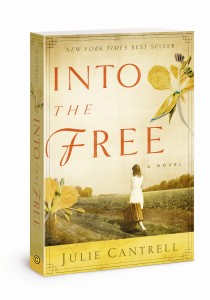
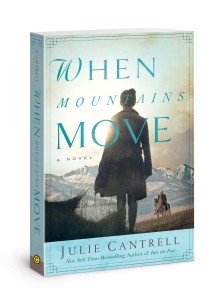
I have the sincere pleasure of welcoming another one of my favorite authors, Julie Cantrell. I first discovered her after reading her debut novel, Into the Free. I can’t emphasize enough, how much I loved this book. I fell in love with the characters and story, so when Julie Cantrell came out with a sequel, When Mountains Move, I was excited. These two books are on the top of my list.
Julie Cantrell is such a gifted writer. The characters and story do not reflect her life at all. They are works of fiction and the story is entirely made up from her imagination. I can only dream and aspire to write like her.
Without further ado, Julie Cantrell.
- When did you decide to become a writer? or When did you discover you were a writer?
Writing has always been my way of processing the world around me. When I was a young girl, I kept a journal. As a teen, I wrote poetry, song lyrics, and short stories. And I’ve always loved to write letters to friends and family across the miles. But when I told my high school teacher that I wanted to be a writer, she quickly nipped that dream in the bud. She told me not to waste my scholarship to study writing, saying that I would be lucky to write greeting cards but that I would never get beyond that. I happen to think writing greeting cards would be a fun job, but she meant it as a criticism. The problem is, I believed her.
I spent the next decade writing only my college assignments, and I never took a writing class. I would walk past the English and Journalism buildings every day and want to sneak into those classes. I ended up studying to become a speech-language pathologist because I am fascinated by language development and communication in all forms. Plus I love to help people. It has been a wonderful career for me. But, I am happy that now, after twenty years, I finally realize that teacher was wrong. I am glad I took the leap and dared to write a novel; and I’m thankful readers are taking a chance on Millie’s story.
- Which writers inspire you?
I am inspired by the authors who blog with me at Southern Belle View: Beth Webb Hart, Rachel Hauck, Shellie Rushing Tomlinson, and Lisa Wingate, as well as dear author friends I’ve met the last two years of my journey. Just a few include Christa Allan, Missy Buchanan, Judy Christie, Lynne Gentry, Kellie Coates Gilbert, Kathy Harris, Ann Hite, River Jordan, Michael Morris, Kathy Patrick, Jolina Petersheim, Karen Spears-Zacharias, Carla Stewart, Michel Stone, and Renea Winchester. I’m also inspired by authors in my local community, (Oxford, MS.) such as Katie Anderson, Ace Atkins, Beth Ann Fennely, Tom Franklin, and Neil White, and by those represented by my agency (WordServe Literary), many of whom join forces to blog at www.wordservewatercooler.com.
- What are your favorite books?
I have WAY too many favorite books to list, but here are a few that surface in my brain at the moment (in no particular order): The Poisonwood Bible, by Barbara Kingsolver; Pippi Longstocking, by Astrid Lindgren; Unbroken, by Laura Hillenbrand; The Samurai’s Garden, by Gail Tsukiyama; Life of Pi, by Yann Martel; Looking for Alaska, by John Green; I Know This Much Is True, by Wally Lamb; The Kite Runner, by Khaled Hosseini; The Glass Castle, by Jeannette Walls; Water for Elephants, by Sara Gruen; and The Last American Man, by Elizabeth Gilbert.
- What books help shape you as a writer?
I send a big shout-out to the classic, Save the Cat by Blake Snyder. A friend, Katie Anderson, loaned me her copy of this screenwriting manual. Of course, I’m still learning new things every day…but this book (actually it is one of a set of three) is a wonderful tool that can be used to sculpt a three-act plot structure. While it is written for screenplay writers, it can easily be adapted for a short story, novel, stage play, etc.
- What is the hardest thing about writing?
Writing. And by that I mean, the actual physical act of sitting down and diving into that fictional world. I have to enter a different mental zone to really get a good scene down on the page, and that’s not always easy in the midst of a hectic life. It’s also difficult to find time to enter that sacred creative space because so much of my day is spent on the other part of the job…emails, social media, interviews, phone calls, mailing books, etc. I fantasize about having an intern someday who could handle some of that “other stuff”…ahhh…the dream.
- What made you decide to sit down and actually start something?
Insomnia. And a bucket list. And a very strong nudge from Millie, my main character, who gave me her story and insisted it wasn’t mine to keep. (Thank you, Millie!)
- How did you come up with your characters and story?
Honestly, it really did just come to me. The original spark for the first novel, Into the Free, was a blurb I had read years earlier about a gravesite in Meridian, Mississippi. Kelly Mitchell was buried there in 1915, and her tombstone reads: Kelly Mitchell, Queen of the Gypsies. This fascinated me, and I thought I’d write about the Romany Travelers who roamed through the southeastern segment of the US (and continue to do so today). The Roma ended up being a thread in a larger coming-of-age tale about Millie Reynolds.
- Where do your ideas come from?
I’ve always been a daydreamer, so most of my ideas come from that strange realm of imagination. I also rely on sparks, like the blurb I mentioned regarding Kelly Mitchell’s grave. And from my real-world experiences, although I never write about real people in my life and hope no one ever worries that I’ll put them in a book. People tend to assume I’m writing about myself, especially because I write in first-person, but the works really are fictional, and Millie’s story is not my own.
- What is your writing process?
I tend to write freestyle, meaning I don’t outline or do anything by following a routine. I write without worrying about edits, and when I come to a space where more research needs to be done or I might need to go back in the story and confirm a detail matches, etc…I just insert *** in that spot and then work out the kinks later. I don’t let those little holes slow me down as I’m writing the story. All of that can be tweaked after the story has roots.
I’m a gardener, so I see the act of building a story much like that of building a garden. Seeds first. Then the roots. Then the stalk. Then the stems. Then the leaves. Then the pruning. Then the blooms. And finally…the fruit. It’s a process that takes time, patience, and a bit of hard work. If you’re afraid of getting dirt under your nails or sweating a bit…writing is not for you.
- Do you write every day?
If I’m lucky.
- Do you write full-time or part-time?
I have been teaching English as a Second Language to Kindergarten and First Grade students until this year. Now, I am writing fulltime. It became a little too tricky to juggle teaching, farming, writing, volunteering, and … my top priority … mothering. While I love all the segments of my life, something had to give, and I feel very grateful to have quiet time now to write during the day while my children are at school. I’ve always been one who believed in Family First. Now, I no longer have to work while everyone else sleeps, and I admit…it’s divine.
- Lastly, what advice would you give to aspiring writers?
- If you feel called to write, then write. No excuses. Just write.
- Don’t worry about what anyone else will think of your work. Write as if no one will ever see it. Write as a gift to yourself, as a tool to stretch your soul, expand your mind, and free your spirit.
- If you do decide to venture into publishing, don’t take yourself too seriously. Don’t get caught up worrying about reviews, sales figures, awards, or shelf space. It’s all part of the business of publishing, but your job as an author is to create. When the other stuff begins to steal the joy of the creative process, remember to put things back in perspective and celebrate the gift you were given. Write because it’s who you are and because you can’t NOT write. Write because it makes you happy and brings you peace. And if you are nudged to share the stories you are given, share them to make others happy and to bring them peace. Nothing else matters.
Pilar, thanks so much for inviting me here today. It’s been an honor to chat with you about writing, and I am grateful that you have dared to pull Millie’s story from the shelf and enter her world for a while.
Thank you, Julie. The honor is mine.
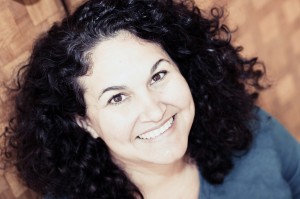 New York Times and USA Today bestselling author Julie Cantrell has served as editor-in-chief of the Southern Literary Review and is a recipient of the Mississippi Arts Commission Literary Fellowship. She is the author of two children’s books as well as Into the Free, whichreceived Christy Awards for Best Debut Novel and Book of the Year 2013 as well as the Mississippi Library Association’s Fiction Award. Cantrell and her family live in Mississippi where they operate Valley House Farm. Her second novel, When Mountains Move, released September 2013.
Learn more:
Website: www.juliecantrell.com
Blogsite: www.juliecantrell.wordpress.com
Facebook: https://www.facebook.com/juliecantrellauthor
Twitter: https://twitter.com/JulieCantrell
Email: julie@juliecantrell.com
Follow


 embodyart